Friday, April 15, 2011

The Perfect Perennial?

We were just talking today about these particular plants and I said, "These are the perfect perennial!" Check out some of the traits of this plant:


  • Winter hardy

  • Evergreen foliage

  • Deer resistant

  • Very early Spring bloom

  • Groovy seed pods

What plants am I referring to, you might ask? Helleborus x ericsmithii. These are hybrids from a famous English breeder from Hadspen Garden. YUP, you guessed it, Eric Smith. We find here at Mohonk that the foliage really holds up all winter and this hybrid has a particularly long bloom season. What a pleasure to find the white flowers jumping out of the leaf litter on a rainy, cold spring day. Hope you enjoy them too, our perfect perennial.


Thursday, April 7, 2011

FOXGLOVES!

We never are this lucky.

Mulched with beech and oak leaves.

Our perennial Digitalis always rot so it is rare if we get this.

Digitalis grandiflora

We were circumspect and in the eleventh hour (November), mulched heavily with beech and oak leaves.


Our plants (thanks to adequate snowfall) came through like this.

Heavy mulch protects those sensitives leaves from harsh winter weather.

We always have this,

Digitalis grandiflora

The Digitalis grandiflora is tried and true.


And now all the yellow can be joined with all this pink.

Digitalis mertonensis Strawberry Foxgloves

...........You too can insure your perennial foxgloves make it through by providing protection against harsh winter temperatures. And they fool you because they look so lush and indestructible in the fall. Do not be fooled, those leaves are sensitive and wither when the thermometer plunges. On top of that, if ice forms in the crown, dead.


So, we can't wait for June.

Wednesday, March 16, 2011

Field Trip - Philadelphia Flower Show 2011

For the third year in a row, I had the honor of judging at the most prestigious flower show in the states, in Philadelphia. As an added bonus, for the second year I judged the "Best of the Day." Ten judges on a select panel choose one overall winner from the recommendations of ten judging panels. It was great fun, so I wanted to share some highlights.


Wisteria, standard care of Mrs. Samuel Hamilton:
This was the "Best of the Day" for Friday; skillfully grown and timed to flower at just the right moment (I didn't vote for it, I fell in love with the Lewisia).


Clivia “Sir John Thouron":
Also belonging to Mrs. H; stunning, 12 spikes, pale lemon yellow, to die for, most passersby were drooling.

Bulbophyllum phalaenopsis - hideously grotesque, and attracting all the local carrion flies. Don't you just love it? (It's an orchid from Java by the way, an island in Southeast Asia.)


Lewisia hybrid - the darling of the show and it did muster 3 votes for "Best of Day." I was smitten! This plant that would fit in your hand was loaded with bloom and perfectly fresh. Someone did their homework.


Viva la France - a 1/4 scale version of the Eiffel Tower surrounded by carousel animals (see accompanying giant butterfly). By the time I got near this display the place looked like a subway platform so I had to rely on a dear friend who was wise enough to take some early shots.


Well, that summarizes my 3rd year judging the most prestigious flower show in the states and the largest indoor show in the world. Oh, we do have our "cross to bear."

Meanwhile, back at Mohonk we have a flower show of our own:


Tuesday, March 1, 2011

Spring Hopes Eternal

Flowering Cherries

It won't be long now before the heralds of spring are upon us. No spring parade of flowering trees is complete without cherries. It's like having a sundae with nothing on top. The standbys come in two forms, both species from Asia (of course): yedoensis, the yoshino cherry and serrulata, the kwanzan cherry. I guess I put the cart before the horse when I tell you that cherries are in the genus Prunus (so are peaches, apricots and nectarines). Yoshinos are the staple of the cherry blossom festival in Washington, DC. They are famous for producing clouds of white or blush pink single flowers and the stately trees can reach 40 feet. Kwanzan is a tree of smaller stature and the carnation pink, ruffled flowers are whimsical in their pompon shape. We have both here at Mohonk Mountain House as well as others and do await their arrival with eager anticipation. The photos here of the yedoensis come from a groovy website called Botany Photo of the Day from University of British Columbia.

You can subscribe at http://www.ubcbotanicalgarden.org/ .

Kwanzan CherryPrunus serrulata
Prunus yedoensisYoshino Cherry


A Rare Variegated Giant Dogwood

Don't you have to have this? Hard to find (I think I just did shhhhhhhhhhhh). Cornus controversa variegata... (wowie zowie!) the variegated giant dogwood; a must for shady woodland plantings and talk about structure in the landscape... whew. The only problem I believe is the growth rate is slow. Oh well, we've got time, we're young.


Variegated Giant DogwoodCornus controversa variegata


Killer Clivia

I mentioned recently that our Clivia were killer. Here's proof...

Our Clivia are KillerClivia


Lilac Shock at New York in Bloom

Lastly but not leastly, I just got back from New York in Bloom. This was the 20th anniversary of this flower show at the State Museum in Albany. See if you don't think the arrangement of 80 gladiolus is aptly named... Lilac Shock.


Lilac Shock

Next week is my third round as a judge at the Philadelphia International Flower Show. Hey, I'm no slacker.

I'll keep you posted.

gartenmeister

Tuesday, February 15, 2011

"Don't Miss" Camellias & Gerberas in the Lollipop Forest

Whew! There has been a break in the weather here and we are actually expecting some balmy 50 degree days. SO MUCH FOR THAT SNOW COVER. I've actually been blamed for all that snow 'cause I was begging for it. Well, now February is upon us and that means a couple of things.

First off, Camellias at Planting Fields! This collection is top rate and and not to be missed. I had the pleasure of a private tour last year after hearing about these plants for years. You too can see them in the flesh by visiting the Planting Fields (State Park) in Oyster Bay. I've passed along a poster highlighting their special weekend. My buddy, Vinnie Simeone, will speak as will longtime garden aficionado, Charles Cresson.

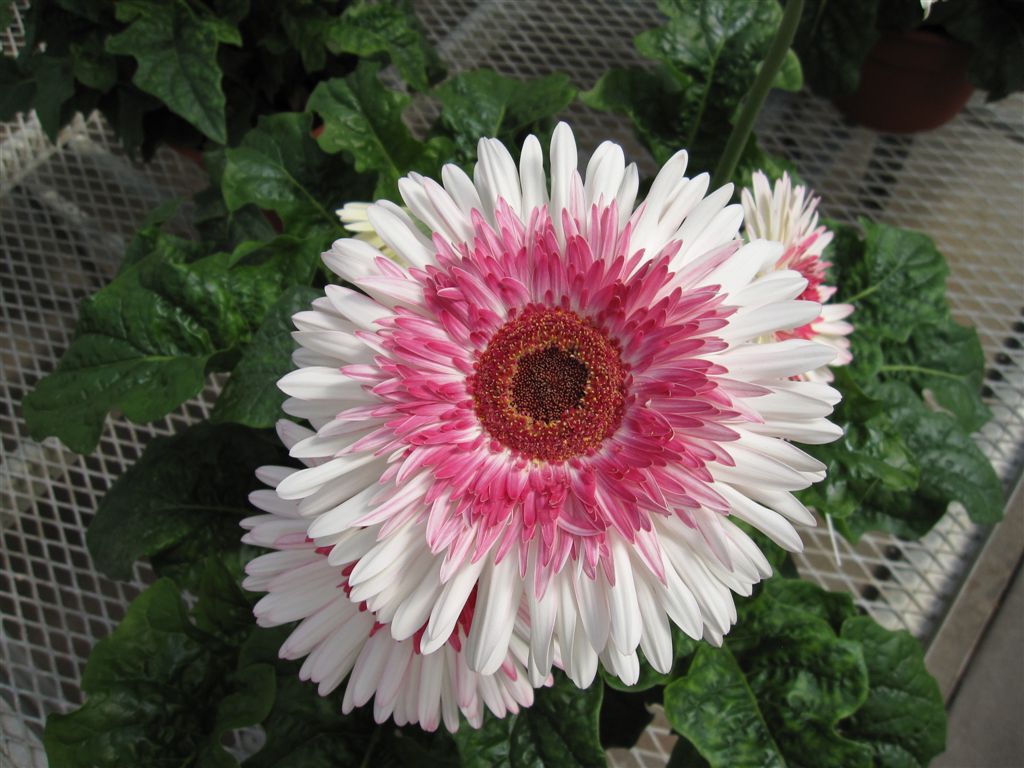
And how about these new Gerberas? The industry is a buzz about these new hybrids that promise superior garden performance. They ain’t cheap, but well worth the investment, so I'm told. We're starting off with 4 varieties: Pamela, Cindy, Yosemite, and Everglades. The flowers are as fanciful as a party dress and the plants produce scads of blooms. Very loud, very intriguing, very very - that's what we are hoping for. Below are some photos from friends in the trade, as these plants are that new. We think they are the perfect underscore to the Lantana trees in the Lollipop Forest. Are we losing our minds? Ask Gene Wilder.

We'll be chatting again soon. TTFN Gartenmeister

CindyEvergladesEverglades


On the benchYosemiteLive at 'Gro and Sell'

Tuesday, February 8, 2011

Our Clivia are killer. These long, cool, frost-free autumns have done them well. After a major repotting and dividing session several years ago, the new divisions are established and setting loads of spikes.


I think that’s true for a lot of potted plants after major surgery. Roots need time to settle in and plants won’t bloom well ‘til they are comfy, cozy in their pots.

Our Clivia collection is comprised mostly of “Flame” Hybrids, which I think are Australian. We were also given one of those “coveted-by-collectors” hybrids ‘Sir John Thouron’.

You know them from the Philadelphia Flower Show—those incredible pale yellows that remind one of lemon gelato. Last year, a long time guest surprised us with a box load of divisions from yet another one of these yellows.

The “youngins” are still in 4” pots so we have some time (5 years) before we can expect spikes. Why doesn’t everyone grow Clivia? They are just too easy.

Lower light levels are preferred, not too hot; they can dry out between watering. (You actually have no choice.) POC as they say online. There enough said, it’s Clivia time and this is a better year than most.

Wednesday, February 2, 2011

New Blog from Der Rosenmeister
Good News! (we could use some) Our "go to guy" for hardy, fragrant, can't-kill-'em-if-you-tried roses is hosting  a new blog. Its title is  "Thorny Issues"............cute. He (Leon Ginenthal) has a small container nursery at his home in Ithaca and specializes in mainly European varieties that are tough as nails. Who doesn't need that in a rose? Please become a follower - derrosenmeister.blogspot.com 
 
Just in case you forgot what roses can look like, I found these babes, all from our rose garden and all for you on this frigid, snow ensconced February day.

Rosa "John Cabot"
Rosa "Autumn Sunset"


Rosa complicata

Thursday, January 27, 2011

Not Delphiniums Again

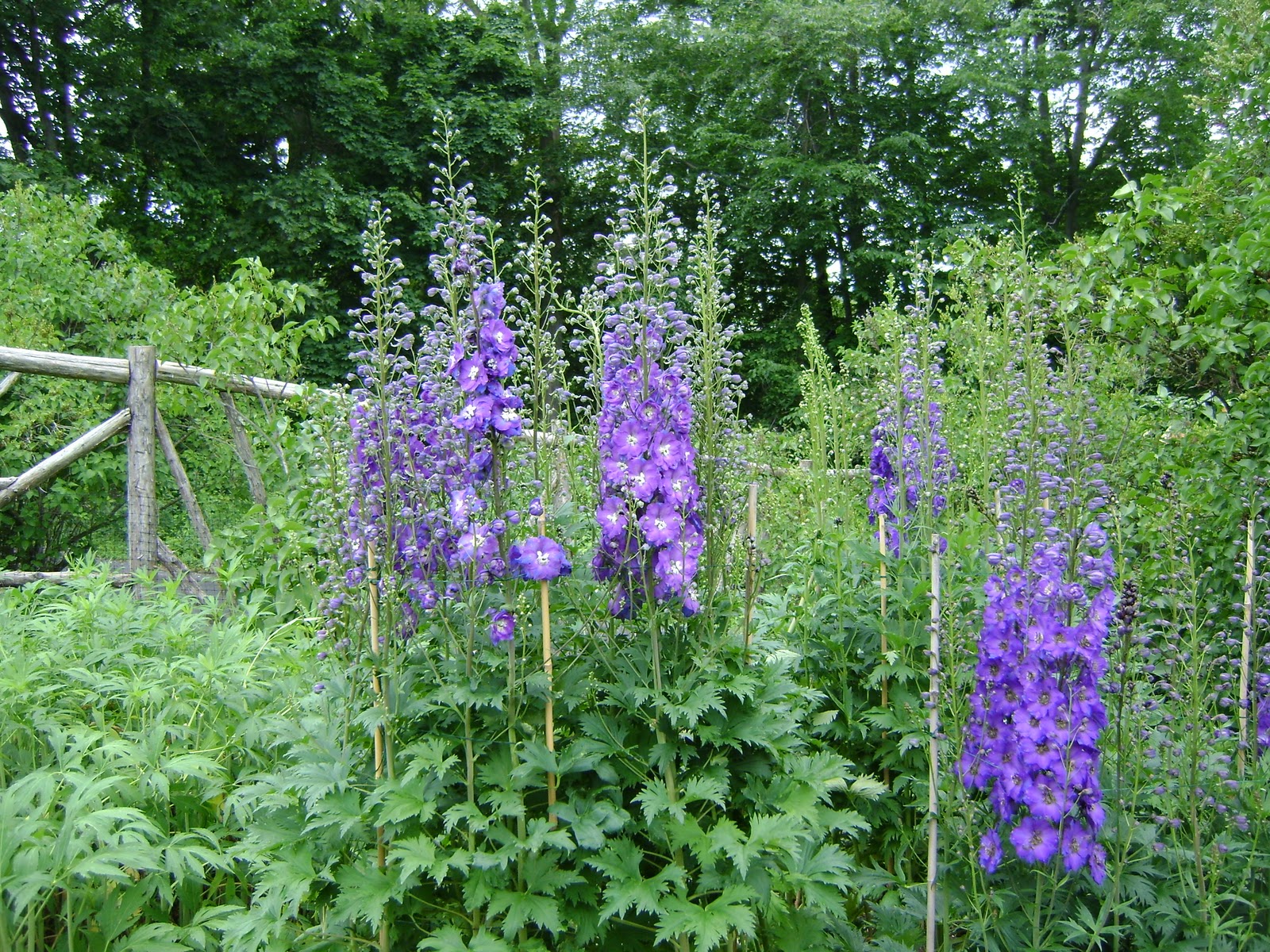
Yes, yes, I cannot be stopped.  I am reminded of my quest for Mohonk to become your Delphinium headquarters as we are in the midst of starting all that seed in the greenhouse.  There have to be dozens of varieties including the New Millennium hybrids we’ve acquired from the breeders in New Zealand.  You, too, can revel at their efforts by surfing to http://www.delphinium.co.nz/.
Yes, yes, I cannot be stopped.  All your perennials including delphs are enjoying the protection from the sub-zero temperatures with all this snow cover.  I know; I asked for it and my wish was granted.

No more stopping.  Back to seed starting.  Most delphiniums require a stint in the fridge to raise the germination rate.  We are moving out the food and moving in the flats.  Anything for the plants, we’ll just get take-out.

Below is some inspiration on a cold winter’s day.  Our valiant efforts will soon pay off as June will be here before you know it.  Promise.

Diamonds Blue
English Blues
RDS Purples

Wednesday, January 19, 2011

Diamonds are Forever BUT Dahlias are a Girl's Best Friend

Just the other day I felt like a real "old school" gardener, actually flipping through bulb catalogs deciding on Dahlias for spring planting AND I wasn't online. A couple of favorite purveyors immediately come to mind: Dutch Gardens for top-quality varieties that have stood the test of time, along with Swan Island and Connells who cater to collectors and connoisseurs.

Dahlias are so popular these days. It's no wonder, they are easy to grow and bloom their fool heads off summer and fall. I have some faves. In the dinner plate “size does matter” category, 'Kelvin Floodlight' shines like a beacon. Ginormous lemon yellow blossoms dare you to pull out the measuring tape and the plants do not stop. Talk about flower power, I've included some pictures from the show garden archives.
Kelvin Floodlight Dahlia
Dare to pull out the measuring tape?


There is another group worthy of mention and that is the 'Karma' series. A vast arrray of colors can be had from this line that was bred for the cut flower industry. They literally produce perfect cutting stems. Need I say more? OK the variety shown is 'Karma Choc'.  Are you thinking Candyland ?

Karma Choc Dahlia


Friday, January 14, 2011

Long Live the King!

I write this on the 12th day of Christmas (for those more familiar with the song than the history, the Twelve Days of Christmas, also known as Christmastide, are the festive days that begin with Christmas Day.) and yet it seems the holidays are long over. Odd? We are reminded of the season by some woodies still persisting with fruit. Certainly crabapples and winterberries (Ilex) come to mind but a recent installation of a green hawthorn down at the Golf Pro Shop atop Mountain Rest Road are cause for a second glance because of the startling red clusters of pome-like drupes. That last description sends botanists to the reference books!

Botanically this green hawthorn is Crataegus viridis 'Winter King', which is a charming selection of a native species. The elegant vase shape and larger fruit make this a "must have". We are so smitten with the tree that plans for our new Gatehouse landscape already include them.

In the northeast, the end of the holidays can be the beginning of our winter storm season. In a gardener's way, we welcome the fresh covering of snow, but not just for romantic snowshoe hikes or invigorating cross-country ski outings. There is nothing like a warm winter blanket for these chilly January nights, and the same applies to all those hardy perennials and biennials taking their long winters' nap. Snow cover is crucial for keeping the soil as temperate as possible and it protects the tender, sensitive leaves of popular biennials like foxgloves and Canterbury bells.

Well, Happy New Year to y'all. I'll be back on schedule with regular correspondence now that we are done decking the halls and dropping the balloons.